Case studies

Five questions Twin has answered.
In market.

Each engagement started with a decision, an archetype, and the hidden variables that separate that customer from everyone else. Here is what was delivered and what it was used for.

Retail

Ranking every grocer in the state by the customers it can reach.

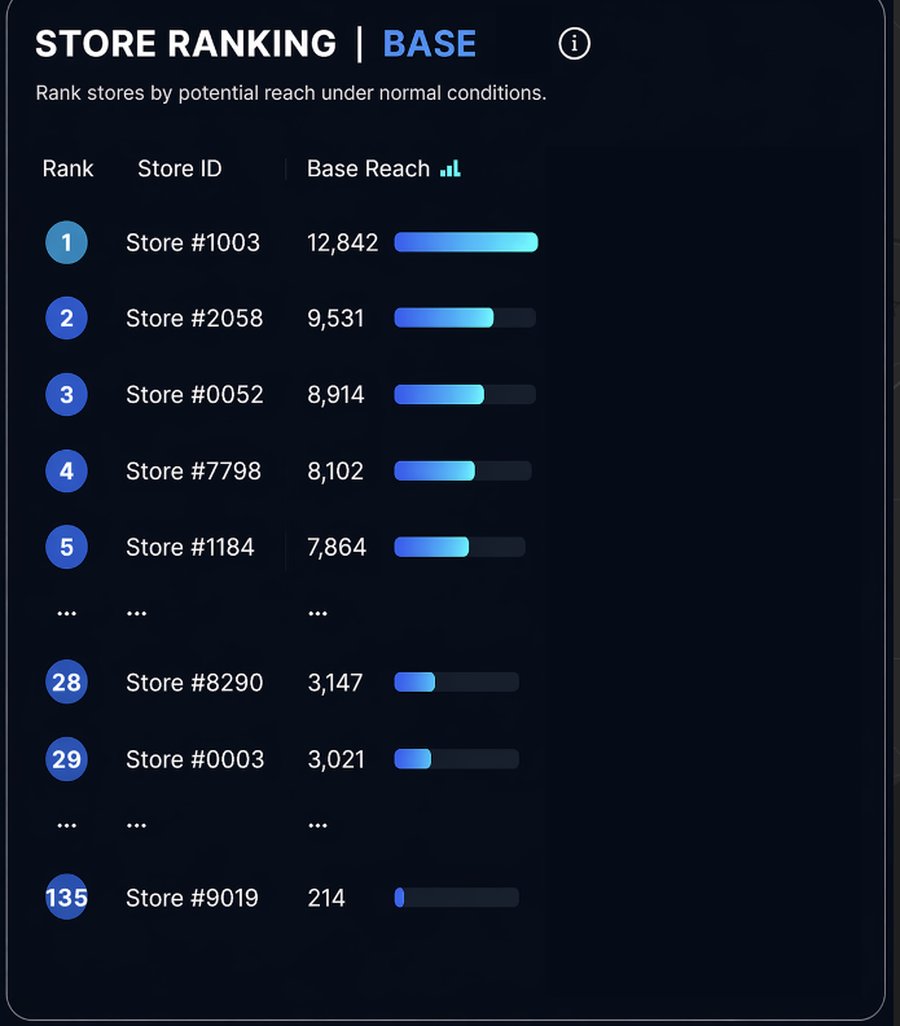
Rank-ordered 93 grocery store locations
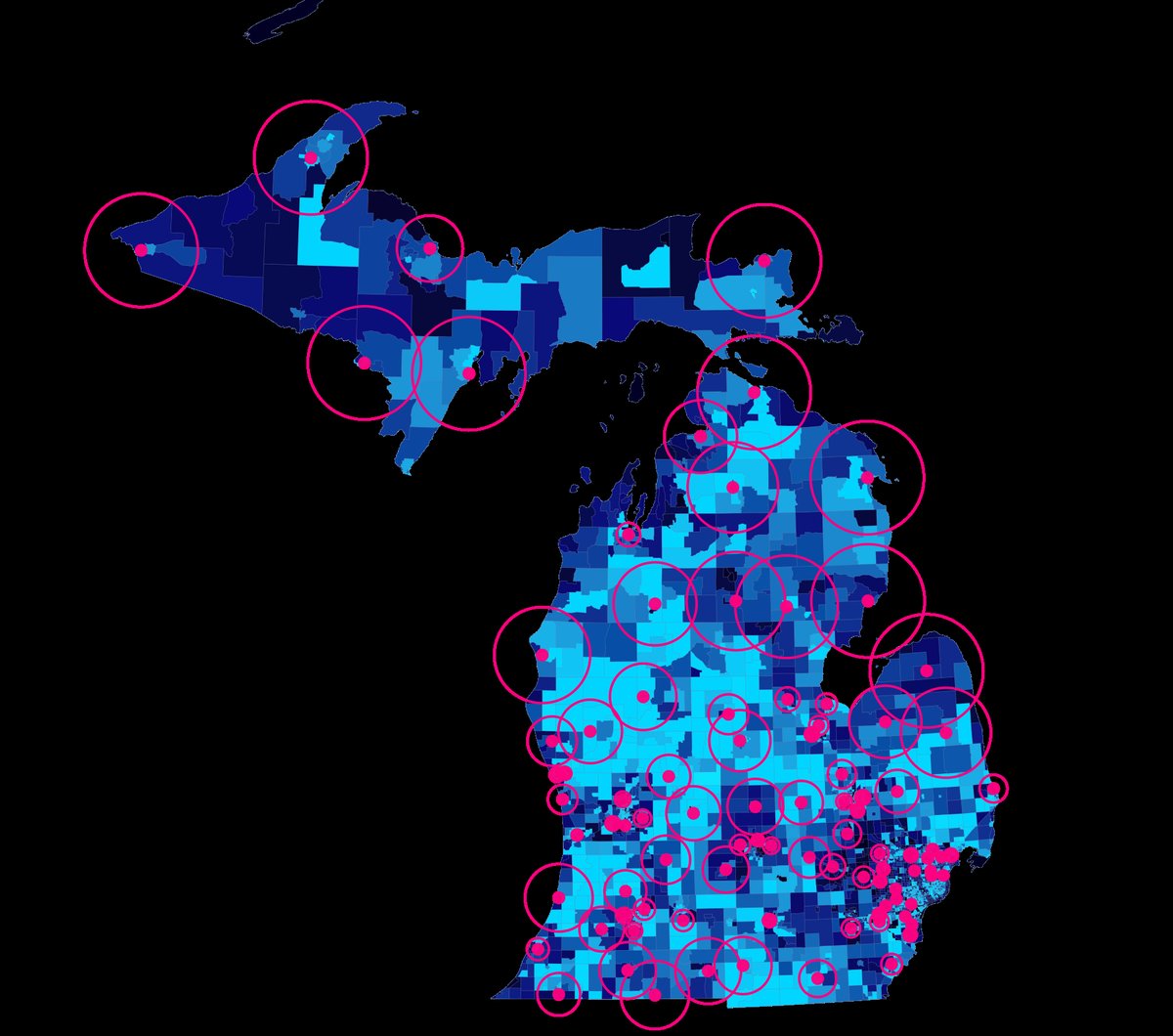
Michigan census tracts colored by projected reach of the target customer, with circles marking store locations
Michigan tracts by projected reach; circles mark the 93 stores.
Store ranking panel listing stores by base reach
Stores re-ranked by base reach.
The challenge

A national packaged-foods manufacturer needed to rank grocers across Michigan to decide where to invest marketing, messaging, and logistics. The available methods ranked stores by household income or by total population, and neither captured the segment they were trying to reach.

The archetype
  • Adults 25–64
  • household income under $35,000
  • households of three or more
Hidden variables
  • Household composition
  • SNAP participation
Delivered

The client's 93 stores re-ranked by projected reach within dynamic catchment areas, plus cold-snap forecasts on the same tracts.

Used to

Re-set distribution priorities, plan marketing campaigns, and time shipments ahead of demand.

Home mobility

Narrowing 5,000 mailers down to the tracts worth mailing.

Priority tracts, sized to 5,000 addresses (sample)
Census tractTownPriority
25009250300Haverhill98
25009250400Haverhill95
25009250500Haverhill92
25009250700Haverhill90
25017383100Ashland87
25017383200Ashland84
The challenge

A home mobility company wanted to test whether a 5,000-piece direct-mail pilot across Massachusetts could complement its digital lead generation. Available lists were built on age and homeownership alone, which do not capture the combination of conditions that drives the purchase.

The archetype
  • Age 65+
  • owns the home
  • single-family, detached or attached
  • built 1980–1999
Hidden variables
  • Ambulatory difficulty
  • Number of stories
Delivered

A rank-ordered list of the top ten priority tracts, sized to 5,000 residential addresses.

Used to

Run the direct-mail pilot and measure lift against the digital baseline.

Building products

Finding homes that can take the product, and owners ready to buy it.

Two archetypes, scored on four questions
Base
Is the household in the market at all?
01 · Recent buyer, first renovationBought within the last five years
02 · Established owner, second renovationIn the home fifteen years or more
Capacity
Can they fund the project?
01 · Recent buyer, first renovationMortgage recently originated · household income · wealth
02 · Established owner, second renovationMortgage paid down or paid off · household income · wealth
Housing fit
Can the product physically go in?
01 · Recent buyer, first renovationAttic present and finished · roof material · number of stories · high ceilings
02 · Established owner, second renovationAttic present and finished · roof material · number of stories · high ceilings
Intent
Are they close to deciding?
01 · Recent buyer, first renovationNo prior project at the address
02 · Established owner, second renovationOne major project already done

When · Hail storm and extreme-heat forecasts flag the roofs most likely to need work this season.

The challenge

A roof window manufacturer entering the U.S. market needed to know which homes its product can physically go into, and which owners are close to a renovation decision. Household income and home value answer neither question.

The archetype

Two archetypes, recent buyer on a first renovation and established owner on a second, each scored on four questions: Is the household in the market? Can they fund the project? Does the product physically fit? Are they close to deciding?

Hidden variables
  • Attic present and whether finished
  • Roof material
Delivered

Census tracts for canvassing, residential addresses for direct mail, and a tract-to-ZIP list for digital marketing, with hail and extreme-heat forecasts flagging the roofs most likely to need work this season.

Used to

Plan routes, tailor messaging, and choose which markets to enter.

Health insurance

Turning five member families into eighteen mappable archetypes.

Five archetypes, eighteen sub-archetypes
GenerationalGen Z · Zillennials · Millennials · Gen X · Baby Boomers · Silent Generation
DiabetesPre-diabetes · New to managing · Managing 2+ years
WomenGeneral preventive · Pregnancy · Black maternal · Post-partum · Peri-menopause · Menopause
CaregiversCaregivers
DualsDual eligible · Caregiver of dual eligible
The second layer · target variables within a group
Managing diabetesEnglish-language OOH → tracts ASpanish-language OOH → tracts B
The challenge

A regional health insurer needed personas for its priority member groups to guide communications, media, and product development. The research available was quantitative and third-party; neither showed where those members live or how their local environment shapes their care.

The archetype

One archetype set for each member group: eighteen groups in five families (generational, diabetes, women's health, caregivers, dual-eligibles), resolved to census tract.

Hidden variables
  • Language spoken at home
  • Caregiving hours
Delivered

Eighteen mapped personas with target-variable packs and tract-level placement lists.

Used to

Brief creative, buy out-of-home by language within a cohort (English in one set of tracts, Spanish in another, for the same "managing diabetes" group), and site community programs.

Pharmacy delivery

Working backwards from sales to the customer behind each drug.

Four archetypes, one per drug
  • 1Antihypertensive Twinsdaytime · routine · low cost
  • 2Metformin Twinsevening & weekend · routine · high cost
  • 3Inhaled corticosteroid Twinssame-day · urgent · highest cost
  • 4Topical retinoid Twinsany window · elective · lowest cost
The challenge

A prescription delivery company needed to know who was driving demand for each drug across Massachusetts, why some service areas under- or over-performed against their footprint, and how to change operating windows. Sales data showed where orders came from, not who placed them.

The archetype

Inferred for each drug from sales rather than specified in advance: four distinct customer profiles across the top prescriptions.

Hidden variables
  • Hours at home on weekdays
  • Vehicle availability
Delivered

One inferred archetype per drug with its reachable-hours profile by census tract.

Used to

Reset delivery windows (routine daytime for one profile, evenings and weekends for another, same-day for a third) and re-staff the service areas underperforming against their projected performance.

Your next 100,000 customers are
hiding in plain sight.

Or write to twin@9Foundations.com.